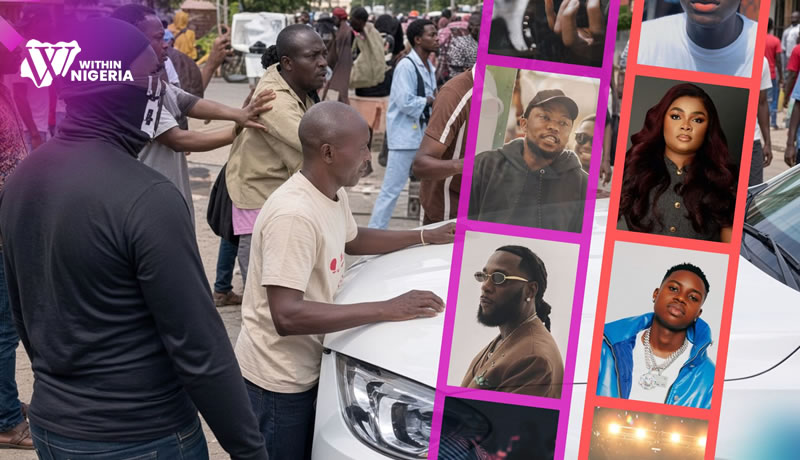
For months, complaints about roadside demands for money in Lagos have appeared in different places, involving different people and unfolding under different circumstances. Some incidents have happened around film locations, others around entertainment events, busy roads, commercial transport routes and ordinary neighbourhoods, while several videos have pushed the issue into public view whenever a familiar face or an expensive vehicle becomes involved. The repeated appearance of the word “settlement” has also given many of these encounters a common description, even though the circumstances surrounding each incident are not exactly the same.
The latest video has once again placed the issue at the centre of attention, this time involving a Tesla Cybertruck around the Onikan Stadium area. The footage quickly travelled across social media, with comedian Sabinus reposting it and describing the situation as an “agbero pandemic.” That reaction added another celebrity voice to an issue that had already generated complaints from entertainers, motorists, filmmakers and commercial drivers across Lagos during 2026.
The Cybertruck incident, however, is only the latest point in a much longer sequence. Before that footage appeared, there had already been complaints involving Bimbo Ademoye, Sirbalo, the Peller and Jarvis wedding, Salt the DJ, Brain Jotter and Burna Boy, alongside complaints from ordinary motorists and protests by commercial drivers. Each episode brought a different detail into the conversation, gradually turning isolated social media incidents into a wider discussion about how money is collected around roads, events, transport routes and public spaces.
April 2026: Bimbo Ademoye’s film crew faces location demand

One of the early incidents that brought the issue into the entertainment space involved actress and filmmaker Bimbo Ademoye. On April 30, 2026, reports emerged that suspected area boys had approached her film crew at an outdoor filming location and demanded money before production could continue. Footage of the confrontation circulated online, drawing attention to the difficulties that production crews can face when they need to work on ordinary streets and public locations.
The incident was significant because the complaint was not about a private event or a luxury vehicle moving through Lagos. It involved a film production, where a crew needs cameras, actors, sound equipment, lighting equipment and other materials to remain in position for hours. A demand for money at such a location can therefore affect the production itself, particularly when refusing to pay could lead to an argument, interruption or pressure on the crew.
The incident also became part of a broader discussion around the informal costs attached to filming in Lagos. Subsequent reporting on the experiences of Nollywood production crews described location related demands as a recurring problem for some filmmakers. That places the Bimbo Ademoye episode within a larger entertainment industry concern rather than treating it as an isolated celebrity complaint.
April 2026: Sirbalo gives his account

Another incident surfaced around the same period involving content creator Sirbalo. According to his account, suspected agberos demanded ₦200,000 from him during an encounter in Lagos. He said he eventually gave ₦50,000, yet claimed that his windscreen was still broken during the confrontation, leaving him with a repair bill he estimated at more than ₦700,000.
The figures attached to the incident immediately made the story stand out because the complaint involved both an alleged demand for money and alleged damage to property. Sirbalo’s account remains his description of what happened, meaning the amounts and circumstances should be presented as allegations rather than as independently established findings. That distinction is important when several different incidents are being discussed together.
His experience nevertheless added another layer to the growing conversation. The concern was no longer simply about someone being asked for money before moving through a location. It also raised questions about what happens when a motorist refuses, negotiates or cannot meet a demand and the encounter becomes more confrontational.
August 2026: Peller, Jarvis wedding brings the issue closer
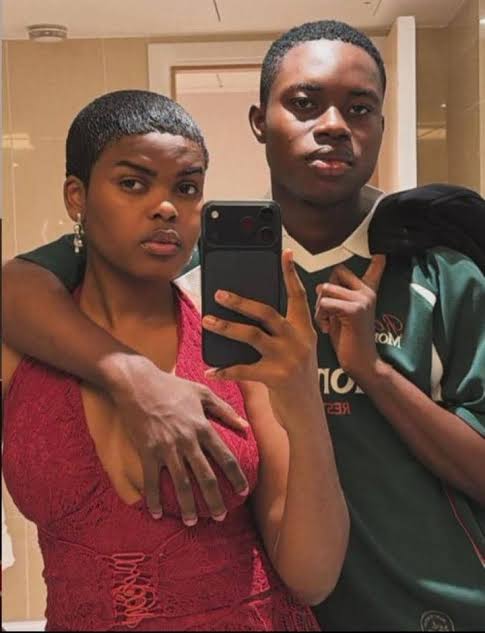
The controversy became much more visible during the August 2026 wedding celebrations involving content creators Peller and Jarvis. A video circulating online showed suspected area boys stopping a Mercedes Benz GLE reportedly travelling towards the wedding and demanding “settlement.” The footage became one of the major videos associated with the renewed conversation about roadside demands in Lagos.
The setting made the incident particularly noticeable because weddings involving popular entertainers and content creators naturally attract large numbers of guests, vehicles, security personnel, photographers and members of the public. Any confrontation around the movement of vehicles can quickly become visible, especially when people at the scene begin recording with their phones.
Peller later alleged that suspected agberos around the wedding venue were responsible for guests losing phones. He said he had spent money replacing some of the devices. That allegation was reported as his account and should not be turned into a confirmed finding that the people involved in the roadside confrontation were responsible for the missing phones.
The wedding also produced another security controversy involving the unauthorised deployment of 2 soldiers, who were later arrested by the Nigerian Army for investigation. That matter should remain separate from the allegations concerning agberos because the 2 incidents involve different claims and different institutions.
August 2026: Salt the DJ reports vehicle damage

Salt the DJ, the sister of singer Ayra Starr, also became part of the growing list of entertainers describing encounters with suspected street boys. She said her vehicle was damaged during an incident involving men whom she described as street boys, with the situation becoming even more notable because she said the men were shouting “Ayra Starr.”
Her account suggested that the men believed she was the singer’s sister rather than the singer herself, adding an unusual personal element to the confrontation. The central issue, however, remained the same concern raised in several other incidents: motorists encountering groups of people on the road and feeling pressured to hand over money.
The incident should still be treated according to the evidence available. Reports about it do not independently establish the identities of the individuals involved, so describing them as confirmed agberos would go beyond the available evidence. What can safely be reported is that Salt the DJ publicly described an encounter involving suspected street boys and alleged damage to her vehicle.
August 2026: Brain Jotter joins the complaints
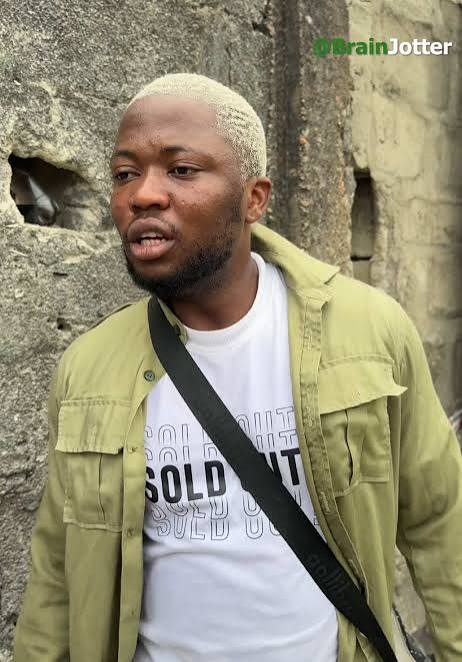
Comedian Brain Jotter also reported an encounter while driving in Lagos. According to the account reported at the time, a group of men allegedly stopped him and demanded “settlement” before allowing him to continue his journey. His complaint became another example of how the issue was increasingly being discussed through the experiences of entertainers who were able to document or publicly narrate their encounters.
The Brain Jotter incident also broadened the conversation because the complaint was not tied specifically to a major wedding or film production. It concerned movement on the road and the alleged demand for money before a motorist could proceed. Similar complaints were also reported from medical doctor Olusina Ajidahun, popularly known as The Bearded Sina, and music video director TG Omori.
Taken together, the August incidents created a clear sequence of complaints involving different professions. Actors, content creators, musicians, medical professionals and motorists were appearing in separate stories involving alleged demands or confrontations. The circumstances varied, but the recurring reference to “settlement” kept connecting them in the public conversation.
August 2026: Ordinary motorists enter the picture
Celebrity stories naturally receive more attention because the people involved already have large audiences, but the complaints did not stop with entertainers. On August 23, 2026, a Lagos woman reportedly described an encounter around the Ikate and Lekki Epe axis in which a suspected tout blocked her car window and demanded money.
She reportedly said she had no cash, after which the confrontation escalated. Her experience matters to the wider discussion because it demonstrates why the issue cannot be treated only as a celebrity problem. An ordinary motorist does not have the same public platform as a popular comedian, actor or musician, yet a confrontation on the road can still create fear, delay or financial pressure.
That distinction is important when looking at the growing number of incidents. The public attention surrounding celebrities may make the problem appear new whenever another famous person speaks about it, but complaints from ordinary motorists and commercial drivers show that the concerns extend beyond the entertainment industry.
September 2026: Burna Boy’s Bugatti attracts attention
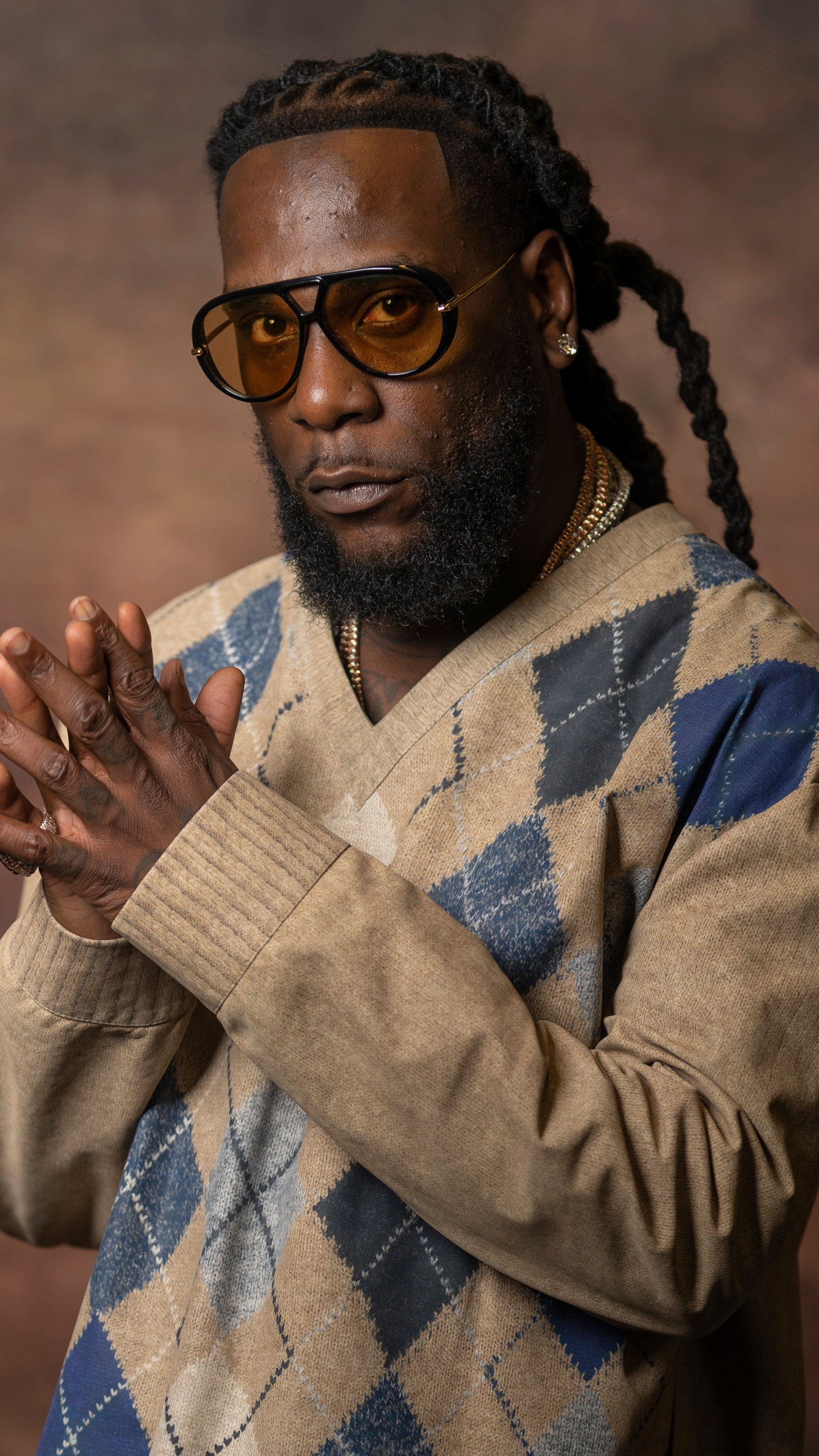
The issue returned to the spotlight in September 2026 after a video involving Burna Boy’s Bugatti circulated online. Reports said a group of people chased after the vehicle as it left a Lagos club at around 6:30am, prompting widespread discussion about people surrounding expensive vehicles and demanding money.
The footage generated strong online reactions because of the vehicle involved and the identity of the celebrity associated with it. Yet the safest description remains the simplest one. The video exists, the vehicle was surrounded or followed by a group of people, and the footage generated discussion about the broader problem of roadside demands.
It would be a step too far to state as an established fact that Burna Boy was extorted or that every person seen around the vehicle was definitively an agbero. The available information does not establish all the circumstances behind the encounter. That makes careful wording particularly important when the wider article is already examining several separate allegations.
September 24 to 25, 2026: The Cybertruck incident
The latest episode arrived between September 24 and September 25, 2026, when a video showing a Tesla Cybertruck around the Onikan Stadium area began circulating widely. The footage was described in reports as showing men allegedly preventing or interfering with the Cybertruck as it attempted to leave the area.
Sabinus reposted the footage and described the situation as an “agbero pandemic,” giving the latest incident another major push across social media. His reaction connected the Cybertruck episode to the series of previous complaints that had already been circulating throughout 2026.
The identity of the Cybertruck owner has attracted additional attention because reports describe the owner as Super Eagles player, Frank Onyekuru. However, the reliable indexed reporting available for this particular episode does not sufficiently establish the player’s name.
The footage itself should also be treated carefully. It shows an alleged confrontation or interference involving the vehicle, but the available reports do not independently establish everything that happened before the recording started or what happened after the footage ended. That makes the video important evidence of the public controversy, but not necessarily a complete record of the entire incident.
September 14, 2026: Commercial drivers take the issue further
The complaints became even broader on September 14, 2026, when commercial bus drivers on the Iyana Ipaja and Iyana Iba axis reportedly stopped operating in protest over alleged extortion. Their complaints reportedly involved several groups and agencies, including LASTMA, the police, FRSC and NURTW members popularly referred to as agbero.
This development is particularly important because commercial drivers depend on daily movement to earn income. A driver who spends the day moving passengers across Lagos has to account for fuel, vehicle maintenance, food, traffic delays and other operating expenses. Additional unofficial collections can become another cost attached to each day’s work.
The protest therefore brought a different perspective into the conversation. Celebrity complaints are often viewed through viral videos, while commercial drivers experience transport related demands as part of their everyday working environment. Their decision to stop operating gave the issue an economic dimension that goes beyond individual confrontations.
The money behind daily transport
The financial side of the issue has also received attention. A December 2025 investigation estimated that Lagos had around 75,000 commercial buses and reported that individual buses could pay between ₦1,500 and ₦2,000 daily to ticket touts or agberos. Such collections were described as an unofficial financial burden that could eventually affect transport fares.
A separate 2026 report also cited a commercial driver describing multiple unofficial collections that could add substantial costs before a journey was completed. These accounts help explain why transport operators have continued to complain about the number of payments associated with operating commercial vehicles.
The figures should not be treated as a universal charge imposed on every bus in Lagos because the reports describe particular experiences and estimates. The broader point is that repeated unofficial collections can increase the cost of running a transport business, and those costs can potentially influence the fares passengers eventually pay.
August 9, 2026: Lagos Government responds
The Lagos State Government has also addressed the wider issue of street urchins and roadside activity. On August 9, 2026, Lagos State Commissioner for Environment and Water Resources Tokunbo Wahab responded to a documentary concerning street urchins and said the government had been arresting and dislodging them from different locations.
Wahab also criticised members of the public, including celebrities and influencers, who give money to street urchins. His argument was that repeated financial patronage could encourage them to return to the streets and regard the activity as a source of livelihood. He called for greater cooperation from members of the public while acknowledging the government’s responsibility for maintaining safety and order.
That position introduces an important part of the conversation because motorists may have different reasons for handing over money. Someone who pays ₦2,000, ₦5,000 or another amount during a confrontation may not necessarily be trying to encourage street activity. A person may simply want to avoid an argument, damage to a vehicle, delay or a potentially dangerous situation.
That difference between voluntary support and payment made under pressure is important when discussing the issue. The government has focused on enforcement and discouraging patronage, while motorists who describe confrontations are concerned about getting through a situation safely.
The repeated “settlement” pattern
Across the 2026 incidents, several recurring situations have emerged. Vehicles have reportedly been stopped while travelling to events, motorists have described demands for money, some entertainers have alleged vehicle damage, filmmakers have reported location demands, commercial drivers have complained about multiple collections and expensive vehicles have become particularly visible whenever footage spreads online.
The incidents are not identical, and the people involved are not necessarily connected to one another. Some allegations remain based primarily on the accounts of the people who experienced them, while some videos show only part of an encounter. That means the different stories should not automatically be treated as proof of one coordinated activity involving every person described online as an agbero.
The common thread is the repeated use of the term “settlement” and complaints about money being demanded around roads, events, filming locations and transport routes. That is why the issue has continued to return to public attention even after individual incidents disappear from the social media cycle.
Why celebrities make the issue more visible
Celebrity complaints have played a major role in keeping the subject alive online. When a comedian, actor, musician or content creator posts a video or describes an encounter, thousands or millions of followers can immediately see the complaint. The story can move from a roadside incident to a national conversation within hours.
Ordinary motorists do not always have the same reach. Someone who experiences a confrontation on the Lekki Epe axis, Ikate, Iyana Ipaja or another busy route may simply continue the journey after resolving the situation, without the incident becoming public. Commercial drivers can also experience repeated financial pressure without every encounter becoming a viral story.
That is why the celebrity incidents should be viewed as highly visible examples rather than the entire story. The complaints from commercial drivers and ordinary motorists provide another part of the picture, particularly when the issue involves daily transport operations and repeated collections.
What motorists should do during a confrontation
Motorists who encounter someone demanding money should first consider personal safety rather than trying to prove a point on the road. Where there is no immediate threat, a driver can calmly ask what the payment is for, who authorised it and whether there is an official basis for the charge. A motorist should avoid escalating an argument simply because the person demanding money cannot immediately provide a convincing explanation.
A motorist should also be careful about assuming that every person wearing a vest, standing beside a road or claiming to represent a transport organisation has the authority to collect a particular fee. Official charges should have an identifiable basis, and motorists can ask for the appropriate information instead of relying entirely on verbal claims made at the roadside.
Where the situation becomes threatening, remaining in the confrontation to record everything may not be the safest decision. Getting away from immediate danger should come first. Once the motorist is safe, the person can document the location, time, vehicle details, description of the incident and any available evidence before making a formal complaint.
Lagos Citizens Gate, traffic complaints
Lagos Citizens Gate provides a channel for residents to submit non emergency complaints, i Reports and whistle blowing reports. The state also lists 112 and 767 as emergency numbers for situations requiring urgent assistance.
Traffic related matters can also be directed through Lagos TMS, which provides information connected with traffic violations, payments and challenges. Its published support contact is 07000 TRAFFIC, which is 07000 8723342.
The Nigeria Police Force also has established complaint and investigative channels for allegations requiring police attention. Social media can bring visibility to an incident, but a formal complaint provides a route through which the relevant authorities can receive the details and investigate where appropriate.
The story beyond the viral videos
The 2026 agbero controversy has now developed far beyond one celebrity complaint or one viral recording. Bimbo Ademoye’s film crew brought attention to location demands in April, Sirbalo described an alleged ₦200,000 demand and subsequent vehicle damage, the Peller and Jarvis wedding produced footage of a vehicle confrontation in August, Salt the DJ and Brain Jotter later described their own encounters, and complaints from ordinary motorists added another dimension.
September brought the Burna Boy Bugatti footage, the September 14 commercial driver protest and finally the Cybertruck incident around Onikan Stadium between September 24 and September 25. Sabinus’ “agbero pandemic” description gave the latest episode a phrase that captured the frustration surrounding the growing number of videos and personal accounts.
Yet the details remain important. Some incidents have been documented through videos, some through personal accounts and some through reports describing allegations that have not been independently established. Treating every allegation as a proven fact would blur the differences between the cases and make it harder to understand what is actually happening.
The bigger concern is therefore easier to define. Lagos motorists, transport operators, filmmakers and entertainers are repeatedly talking about encounters involving demands for money, alleged harassment, property damage, informal collections and confrontations around public roads and event locations. The government has responded with enforcement measures and a warning against financial patronage, while motorists continue to face the practical question of how to handle such encounters safely.
The latest Cybertruck footage may eventually be followed by another video, another celebrity complaint or another protest by transport operators. The names and vehicles may change, but the underlying issue remains the same: motorists want to know who has the lawful authority to demand money from them, why such payments are being requested and what they can safely do when a roadside encounter turns confrontational.
For motorists, the most important step is to separate an official charge from an unsupported demand, avoid unnecessary confrontation and use established reporting channels when an incident needs formal attention. For the wider public, the sequence of events throughout 2026 shows why the conversation cannot be reduced to one viral video or one celebrity’s experience. The complaints now stretch across entertainment, commercial transport, ordinary driving, film production and some of Lagos’ busiest public spaces.