Monday, 12 Oct 2026
  • My Feed
  • My Interests
  • My Saves
  • History
  • Latest Updates
Subscribe
WITHIN NIGERIA
  • HOME
  • NEWS
  • ENTERTAINMENT
  • FACT CHECK
  • 🔥
  • FEATURES
  • POLITICS
  • SPECIAL REPORTS
  • ANALYSIS
  • SPORTS
  • NOLLYWOOD
  • EDUCATION
  • OPINION
  • BUSINESS
  • LIFESTYLE
  • HEALTH
  • TECHNOLOGY
  • PRESS RELEASE
Font ResizerAa
WITHIN NIGERIAWITHIN NIGERIA
  • HOME
  • NEWS
  • ENTERTAINMENT
  • FACT CHECK
Search
Have an existing account? Sign In
Follow US
© WITHIN NIGERIA MEDIA LTD. All Rights Reserved.
Nigeria History

October 12 in Nigerian History: CBN introduced N1000 Banknote Under Soludo

Last updated: October 12, 2026 10:26 am
Sodiq Lawal Chocomilo
Share
SHARE

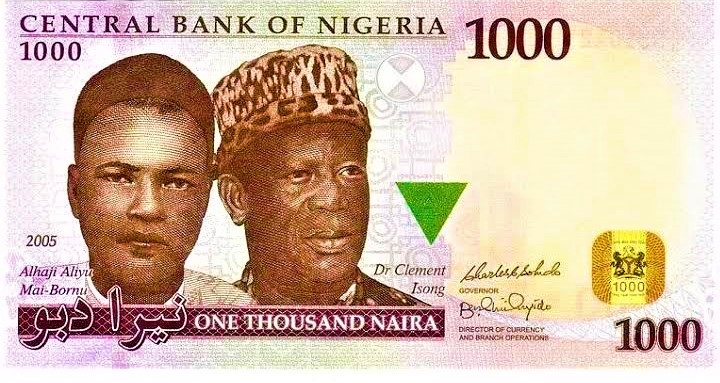
On October 12, 2005, the Central Bank of Nigeria (CBN) officially put the One Thousand Naira (N1,000) banknote into circulation for the first time in the history of the nation. 


The new note, which became the highest denomination currency in the country, was unveiled in Abuja by the Governor of the Central Bank, Professor Charles Chukwuma Soludo.

Speaking at a press briefing at the CBN headquarters, Prof. Soludo said the introduction of the higher denomination was aimed at reducing the volume of cash in circulation and easing large transactions for businesses and traders.

“This is a major step forward for our banking system,” Soludo said. “The note is designed with advanced security to prevent counterfeiting and will make cash handling easier for businesses and traders.”

The CBN Governor disclosed that the N1,000 note carries several enhanced security features, including a gold-coloured security strip, watermark portrait, microprint text, and traditional Nigerian cultural motifs woven into the design border.

The front of the note features the portraits of two prominent Nigerians — Alhaji Aliyu Mai-Bornu and Dr. Clement Isong, both former governors of the Central Bank of Nigeria.

The CBN has assured that the new note will not cause inflation.

“We have mechanisms to ensure stability,” Soludo said. “The launch is purely to improve efficiency and convenience of cash transactions. Inflation is not expected as a result.”


TAGGED:Central Bank of NigeriaCharles SoludoN1000 noteNigerian historyOctober 12
Share This Article
Email Copy Link Print
BySodiq Lawal Chocomilo
Follow:
Lawal Sodiq Adewale aka CHOCOMILO is an award winning journalist. Mail me at Chocomilo@withinnigeria.com. See full profile on Within Nigeria's TEAM PAGE
Previous Article jennifer meyer Jennifer Meyer Marries Geoffrey Ogunlesi in Hawaii With Ex-Husband Tobey Maguire Officiating
Leave a Comment

Leave a Reply Cancel reply

Your email address will not be published. Required fields are marked *

Your Trusted Source for Accurate and Timely Updates!

Our commitment to accuracy, impartiality, and delivering breaking news as it happens has earned us the trust of a vast audience. Stay ahead with real-time updates on the latest events, trends.
FacebookLike
XFollow
InstagramFollow
LinkedInFollow
MediumFollow
QuoraFollow
- Advertisement -
Ad image

You Might Also Like

Nigeria History

May 18: Today in Nigeria history, 32 people were killed during Muslim-Nationalist riots over independence

By
Sodiq Lawal Chocomilo
Nigeria History

September 18 in Nigeria History: Bandits Kill 5 Farmers in Katsina in 2020, Senator Waziri Dies in 2010

By
Sodiq Lawal Chocomilo
Nigeria History

1934 July 13: Akinwande Oluwole “Wole” Babatunde Soyinka was born

By
Sodiq Lawal Chocomilo
National

Buhari nominates IMF executive director as CBN deputy gov

By
Adejayan Gbenga Gsong
WITHIN NIGERIA
Facebook Twitter Youtube Rss Medium

About US

 Your instant connection to breaking stories and live updates. Stay informed with our real-time coverage across politics, tech, entertainment, and more. Your reliable source for 24/7 news.

Top Categories
  • World News
  • Opinion
  • Politics
  • Tech
  • Health
  • Travel
Usefull Links
  • Contact Us
  • Advertise with US
  • Complaint
  • Privacy Policy
  • Cookie Policy

© . All Rights Reserved.