
There are names that belong to history, and there are questions that refuse to remain in the past.
Brymo’s Explosive Allegations
Nigerian singer Ọlawale Ọlọfọrọ, popularly known as Brymo, has reignited a decades-old debate about the origins of campus cultism in Nigeria, directing angry accusations at Nobel laureate Professor Wole Soyinka, former President Olusegun Obasanjo and Yoruba traditional leader Gani Adams.
In a series of social media statements published in October 2026, the singer called on Soyinka to publicly address the history of secret cults in Nigerian higher institutions and their alleged links to the deaths of students. Brymo’s words were direct and confrontational.
“I will not forgive how Wole, Olusegun, and Gani Adams killed our boys,” he wrote.
He also described Soyinka as “a very violent man” and said he was “attacking the source”, insisting that he would not stop until he had made his point. The singer went further, asking Soyinka to grant an interview explaining what he was thinking when the groups he described as killer cults were founded.
His post also mentioned Pete Edochie, former President Obasanjo and the late Afrobeat pioneer Fela Anikulapo-Kuti. However, he did not clearly explain Pete Edochie’s role in the controversy in the statement provided.
Brymo’s accusations have raised questions about the relationship between the original student confraternities of the 1950s and the violent campus cult groups that emerged in later decades.
But to understand the history he is challenging, it is necessary to return to a time when the word confraternity did not carry the same meaning it does for many Nigerians today.
The Question Behind Brymo’s Accusation

At the centre of Brymo’s post is an allegation that Soyinka should answer for the origins of secret cults in Nigerian universities.
There is a documented historical connection because Soyinka was one of seven students who founded the Pyrates Confraternity at the University College, Ibadan, in 1952. The organisation is widely regarded as the starting point of the history of campus confraternities in Nigeria. But its founding ideals were different from the violence that later became associated with campus cultism.
According to the National Association of Seadogs (NAS), the organisation that grew out of the Pyrates Confraternity, the founders wanted to challenge elitism, tribalism and the social divisions that shaped student life in colonial Nigeria.
That distinction matters because the fact that Soyinka co-founded the Pyrates Confraternity does not, by itself, establish that he founded or directed the violent groups responsible for later campus killings.
Brymo’s post raises a question about accountability, but the historical record must be examined before responsibility can be assigned.
What, then, was the organisation Soyinka helped establish, and how did the history of campus confraternities become linked to violence?
1952: The Birth Of The Pyrates Confraternity
The story began in 1952 at the University College, Ibadan, now the University of Ibadan.
At the time, Nigeria was still under British colonial rule. The university was an important centre of higher education, but student life reflected wider divisions in society, including class privilege, tribal identity and the influence of wealthy families.
A group of seven students decided to challenge those attitudes. They established the Pyrates Confraternity, with Soyinka among its founding members. The other six were Ralph Opara, Pius Oleghe, Ikpehare Aig-Imoukhuede, Nathaniel Oyelola, Olumuyiwa Awe and Sylvanus Egbuche.
The group became known as the Original Seven. According to the NAS’s account of its history, the founders wanted to resist elitism, tribalism and what they considered outdated social conventions. They sought to create a brotherhood in which students would not be judged by their ethnic backgrounds or family status.
The unusual spelling of Pyrates was deliberate. The name was chosen partly for its rebellious character and to distinguish the group from ordinary pirates.
In a 1998 interview with Canada’s Immigration and Refugee Board, Soyinka said the organisation’s mandate was to fight for human rights and social justice. He also described peaceful protest against the Nigerian government as part of its activities.
The early Pyrates were therefore not established with the stated purpose of killing students or terrorising university communities. Their founding philosophy was one of rebellion against social injustice. The troubling part of the story is what happened as campus confraternities developed over the years.
The Pyrates Before The Bloodshed
The original Pyrates Confraternity presented itself as a non-conformist student movement. Its members challenged tribalism, class divisions and the colonial attitudes that shaped the society around them. The organisation’s history also shows that it grew beyond its original campus.
By 1978, it had expanded to 18 branches, according to the NAS. Its membership included people who had attended different Nigerian universities.
However, the growth of the Pyrates also coincided with the emergence of other campus organisations that used the confraternity model.
Over time, the word cultism became associated with groups accused of operating in secrecy, engaging in violent rivalries and using intimidation to control students.
This is where the distinction between the original Pyrates and the later campus cult crisis becomes important.
The original organisation maintains that its ideals were different from those of violent campus groups. Academic research has also distinguished the early Pyrates, described as non-violent, from the more violent organisations that emerged later.
That does not mean the history of the Pyrates can be ignored when examining the development of campus confraternities. It means the history must be told accurately, without treating every organisation that followed as identical to the one founded in 1952.
When Campus Confraternities Changed
The transformation did not happen in a single day. Academic research places the growing presence of secret societies in Nigerian higher institutions in the mid-1970s, with the problem becoming increasingly serious in subsequent decades.
A 1994 study by Susan Aderonke Folarin, published through the National Institute for Policy and Strategic Studies, described the growing menace of secret cults in higher institutions and the threats their activities posed to lives, property and discipline.
Adewale Rotimi’s 2005 study, Violence in the Citadel: The Menace of Secret Cults in the Nigerian Universities, similarly traced the development of campus cultism to the Pyrates Confraternity while distinguishing the original group’s non-violent character from the violence that later emerged.
As new organisations appeared, campus rivalries became more intense. Groups were increasingly associated with secrecy, intimidation and violent confrontations.
The original ideals of brotherhood and opposition to elitism were no longer enough to explain what was happening on many campuses. The result was a growing national problem that universities, students, families and security agencies struggled to contain.
From Brotherhood To Bloodshed
Campus cultism became a serious concern because its consequences extended beyond membership disputes.
Violent confrontations between rival groups have been associated with killings, injuries, intimidation and fear within university communities. Students who had gone to school to study found themselves in environments where rivalries could turn deadly.
The crisis also created a difficult distinction between student confraternities that described themselves as social or advocacy organisations and groups accused of using similar names or traditions to justify violence.
The history is not simply a story of one organisation becoming violent. It involves the emergence of different groups, changing campus conditions and the failure of institutions to prevent violence.
A 2005 study in the Nordic Journal of African Studies identified campus cultism as a major social problem both within and outside Nigerian universities.
This wider history is essential to understanding why Brymo’s allegations have attracted attention. His anger is directed at prominent figures associated, in different ways, with Nigeria’s political and cultural history. But the deaths and violence he invokes demand more than accusations.
Soyinka’s Complicated Legacy
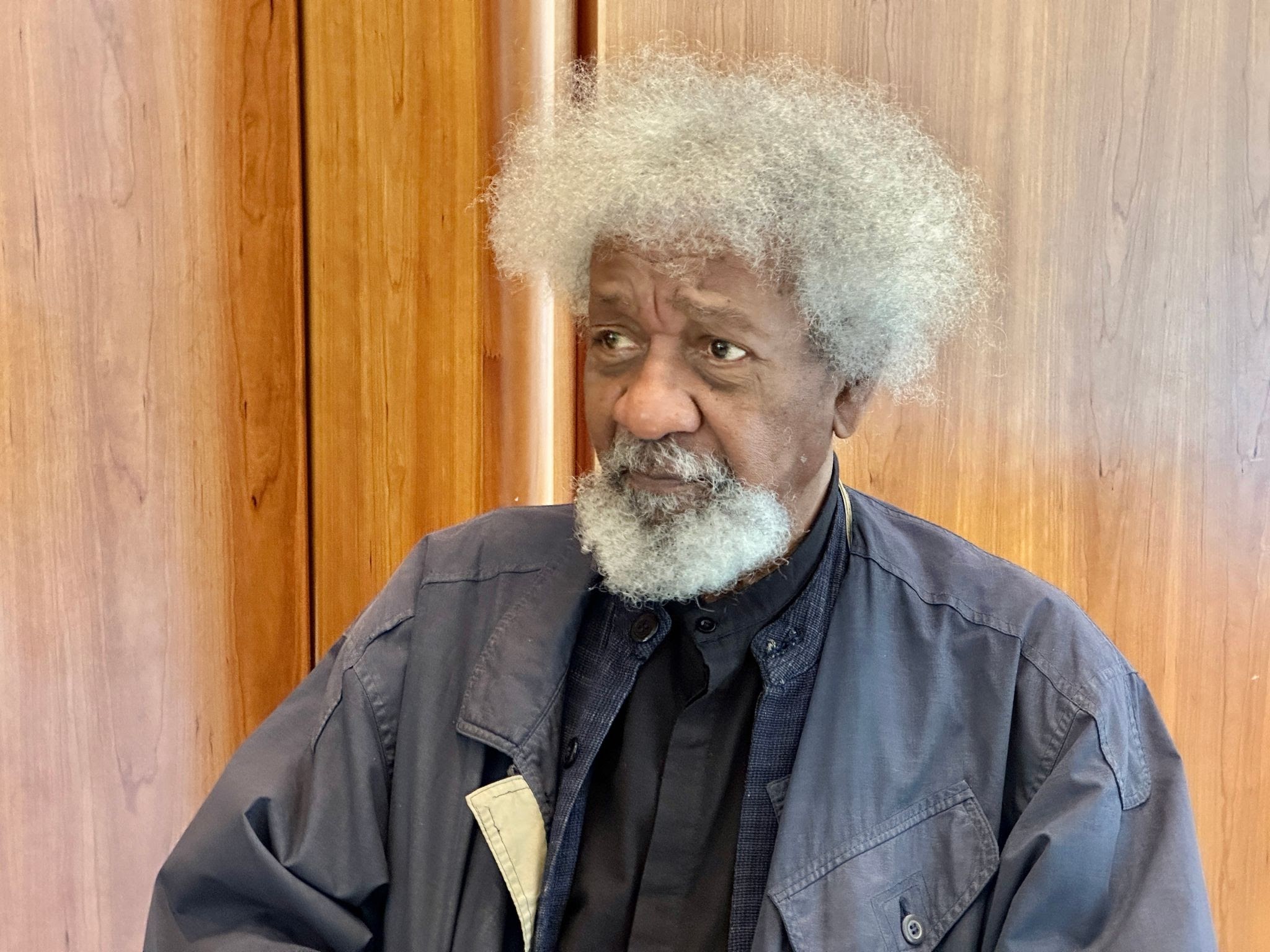
Soyinka’s place in the story is clear: he was one of the seven founders of the Pyrates Confraternity in 1952. The more difficult question is whether that founding role makes him responsible for the violent campus cult groups that emerged later.
The available historical accounts do not establish that conclusion. The NAS says that, as disturbing behaviour by imitator organisations began to appear on campuses in the early 1970s, the original Pyrates distanced itself from them. On October 31, 1980, the organisation was formally registered under the name National Association of Seadogs.
On July 28, 1984, it closed all its student branches on university campuses, saying it wanted to protect the organisation’s integrity. These dates are important because they show that the organisation’s relationship with campus life changed as the problem of violent groups developed.
The NAS continues to describe itself as a community-focused advocacy organisation engaged in social and humanitarian work.
None of this removes the need to examine the history of campus confraternities or the questions raised about their development. However, it makes it inaccurate to treat Soyinka’s founding role as proof that he personally caused or directed subsequent killings.
Brymo wants Soyinka to speak publicly about the history and its consequences. That is a demand for an explanation. It is not, on its own, evidence that the allegations of responsibility are true.
Why Brymo Brought Obasanjo And Gani Adams Into It

Brymo did not limit his accusations to Soyinka. He also named former President Olusegun Obasanjo and Gani Adams, the Aare Ona Kakanfo of Yorubaland.
In his post, he accused the three men of being responsible for the deaths of Nigerian youths. But he did not set out a detailed account of the specific incidents or evidence that would establish the individual roles he attributed to them. However, in a voiceover accompanying his post on Instagram, Brymo referred to content creator Isbae U’s interview with Obasanjo.
Obasanjo’s long public career and Adams’s place in Yoruba cultural and political life do not, by themselves, establish a connection to particular campus killings.
Pete Edochie, Fela And Other Names In Brymo’s Post
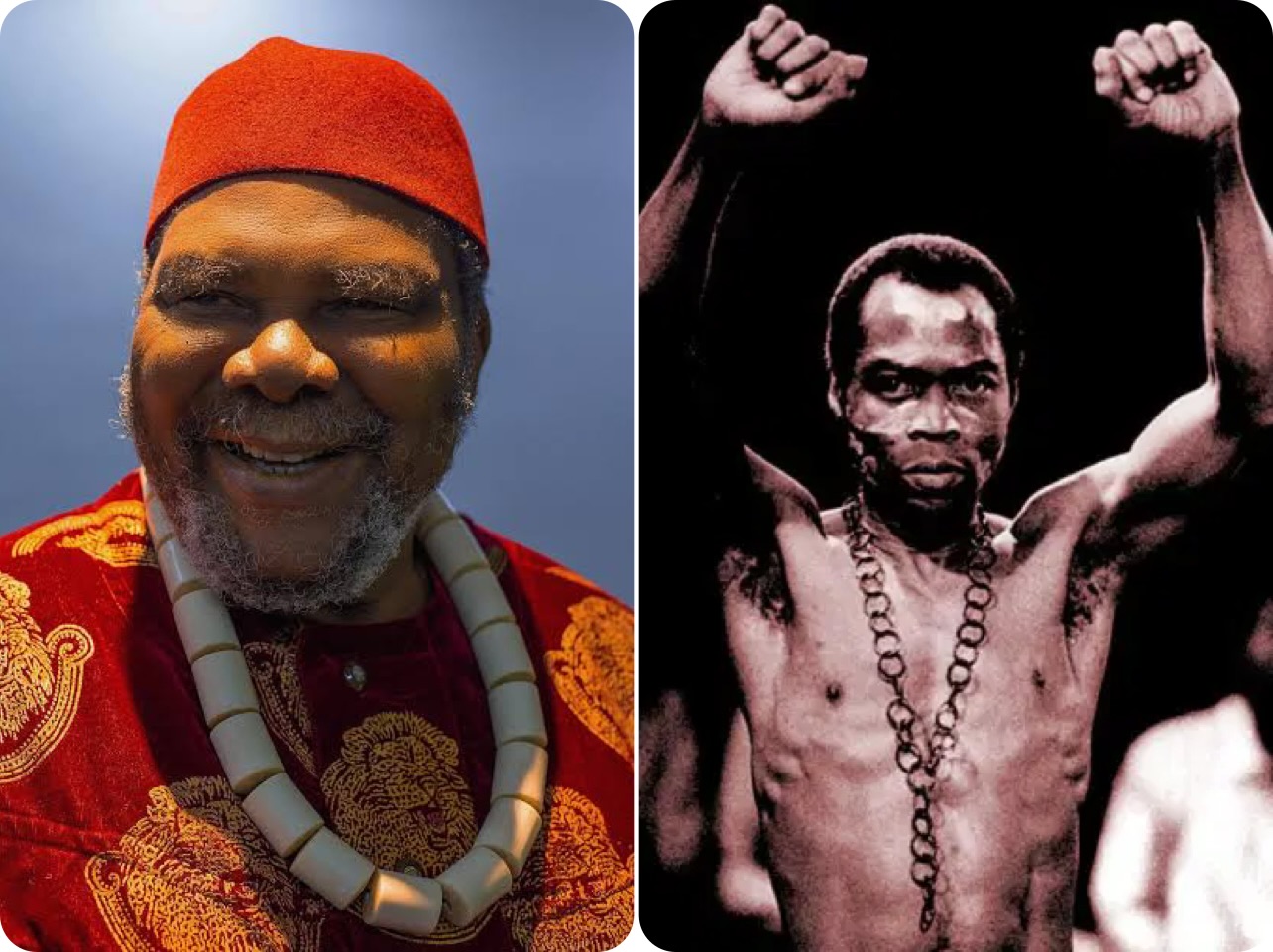
Brymo’s post also includes Pete Edochie and Fela Anikulapo-Kuti, but the two names appear in different contexts.
He refers to Pete Edochie at the beginning of a passage about Obasanjo and the importance of a public address by Soyinka on secret cults. He does not explain what Edochie allegedly did or how the veteran actor connects to the history of campus cultism. But in an accompanying voiceover, he refers to Edochie as a fine man. In his words:
“After seeing Pete Edochie and Chief Olusegun Obasanjo’s interview with Bae U Barbie, I was shook. Pete Edochie is the finest man alive in this country besides the president as I speak… he fall my hand eh. He spent so much time making the interviewer feel like a bitch. Omo, o dun mi o (I’m pained).”
It would therefore be misleading to suggest that Edochie was accused of founding a cult or participating in campus killings based on this post alone.
Fela, meanwhile, appears in Brymo’s comparison between how he believes the musician protected his own associates and how he accuses Soyinka and others of treating Nigerian youths.
Brymo writes that Fela “saved his own boys”, while accusing Soyinka and his cousin of contributing to the deaths of others.
The references show that Brymo is framing the dispute as a wider argument about influential Nigerians, their responsibilities and the treatment of younger generations.
The Question Brymo’s Outburst Leaves Behind
Brymo’s statements have brought attention back to a history that is older than the singer himself.
The Pyrates Confraternity began in 1952 as a student movement that said it wanted to challenge elitism, tribalism and social injustice. By the mid-1970s, secret cults had become a growing concern in Nigerian higher institutions. In 1980, the Pyrates organisation was formally registered as the National Association of Seadogs, and in 1984 it ended its campus branches after the university authorities and public routinely blamed them for the violent encounters perpetrated by newer rival clubs.
The violent campus cult crisis continued to raise concerns long after those changes. The timeline reveals why the subject cannot be reduced to one person’s accusation. The emergence of violent groups involved developments over several decades, and responsibility for specific crimes must be established through evidence rather than inferred from a historical association.
Soyinka’s role as a founder is documented. The original Pyrates’ stated ideals and its later separation from campus activities are also documented. See screenshot of Brymo’s post below:

Conclusion: Beyond the accusations
In his post, Brymo declares: “I used to live for love, now I live for vengeance.” The line captures the anger driving his intervention, but vengeance cannot resolve a history as complicated as Nigeria’s campus cult crisis.
The more important task is to establish how student confraternities developed, how some groups became associated with violence, which individuals were responsible for specific crimes and why efforts to protect students have so often struggled.
Brymo has demanded that Soyinka address the past. Whether the people he named will respond to his allegations is a separate question.
What remains beyond dispute is that violence on campuses has had serious consequences for students and their communities. The victims deserve more than a social media argument. They deserve a history grounded in evidence, accountability where wrongdoing is established, and sustained efforts to ensure that future generations can pursue their education without fear.