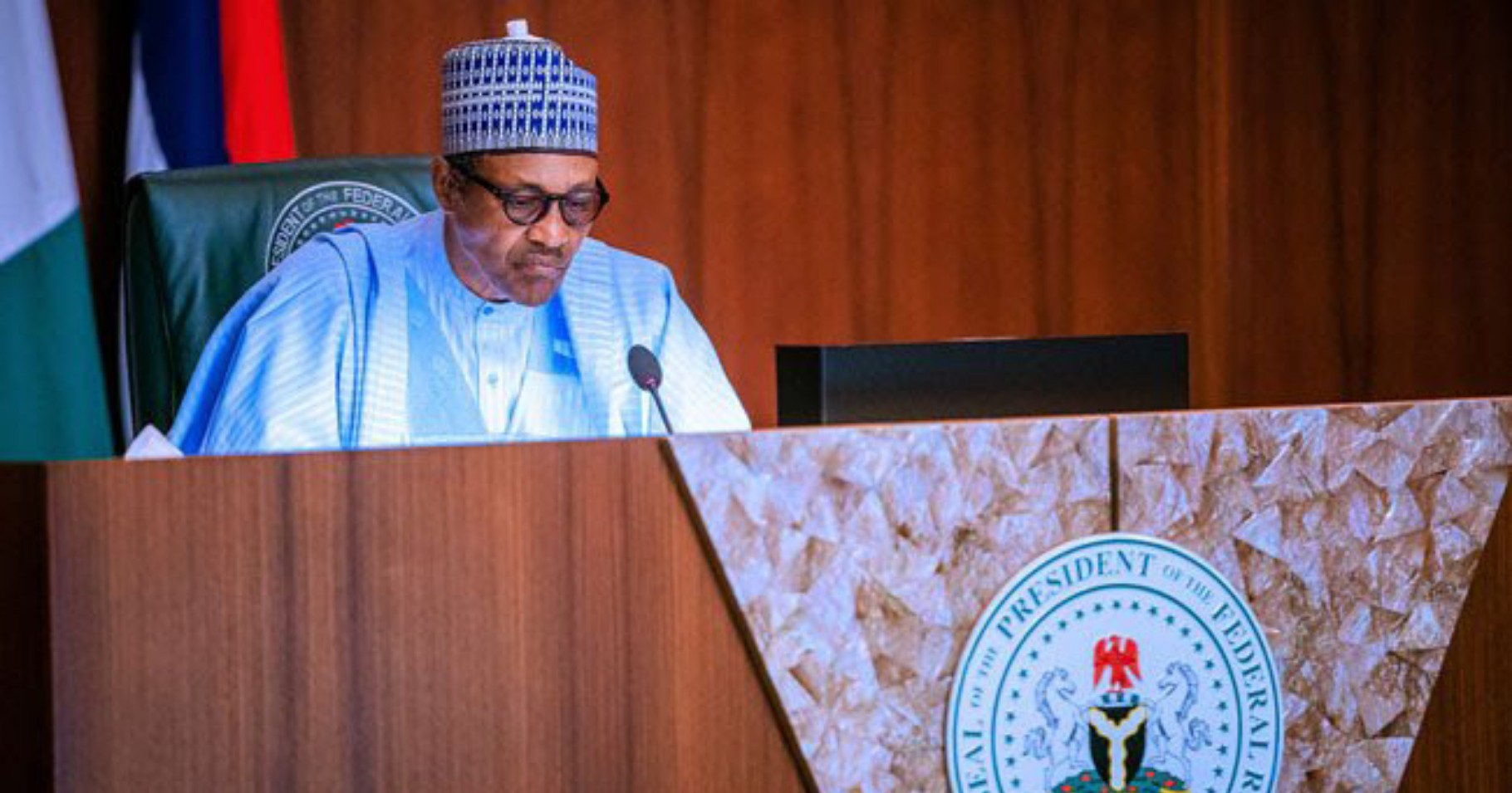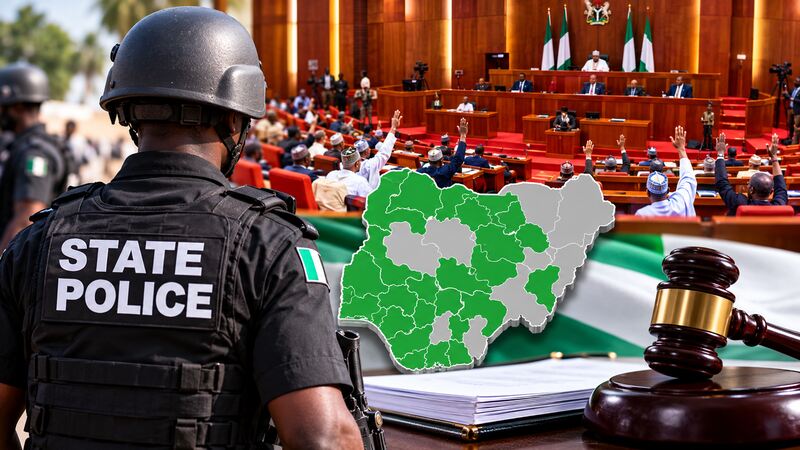
One news headline that will have a somewhat salutary effect on Bola Tinubu’s presidency when it leaves office, whether next year or in 2031, is its determination to decentralise Nigeria’s policing architecture and make state policing a reality.
One topical issue that has dominated public discourse across different administrations since the return to democracy twenty-six years ago is the issue of state police. Every government at the federal level has either spoken glibly and made perfunctory attempts to create one or pushed vehemently and made a spirited effort to decentralise the nation’s overly centralised policing structure. However, neither of the two groups has come close to achieving these objectives. The closest we have are regional or state security outfits set up by state governments.
These makeshift security outfits that are nothing more than glorified vigilantes, who are tasked with addressing the security crisis in their domains, are underfunded, poorly equipped and understaffed, hence making it difficult for them to tackle the problems they are set up to address, which then defeats the essence and purpose of their establishment in the first place. However, the call for the creation of state police has become louder in recent years owing to the perennial violent attacks and wanton killings occasioned by the deepening security crisis and the palpable failure of the security agencies to end the menace of brutal armed non-state actors. These unending attacks have left thousands dead and thousands displaced from their ancestral homes.
On Tuesday, Nigeria took a giant step towards the creation of state police after a Bill to decentralise Nigeria’s centralised policing, which has been in the works for the better part of Tinubu’s administration, received the approval of all 36 states of the Federation. The approval of the bill by the 36 states signals an important milestone for Tinubu’s administration in its effort to tackle insecurity.
To be candid, one did not expect the Tinubu government to encounter much of a hurdle or obstacle in meeting the threshold and constitutional requirement of 24 states’ approval for the amendment to the existing legislative police framework to be altered and pave the way for the creation and establishment of the state police.
For years on end, the establishment of state police has been widely touted as the panacea and lasting solution to Nigeria’s perennial security crisis, and with this ingrained public consensus, many political actors at the state level, particularly governors and House of Assembly members, have expressed their readiness to lend their unquestionable and total support to the bill when sent to them for ratification.
After the approval of the state assemblies, the Senate on Wednesday sent the bill to the president for assent. However, while the process of establishing a state police moves at a laudable pace, doubts and misgivings persist about abuse and impunity. There are concerns about giving control of armed security agents to characters who are likely to use them in a manner that undermines the very essence of the creation of state police without first building the institutional guardrails to prevent abuse and misuse.
While many Nigerians acknowledge the need for the creation of state police, concerns have been raised by cynics who fear that having a policing system where the officers are only answerable to the governors of their states portends danger for the polity. The concerns and fears of the latter group are not unfounded; in fact, they are informed by our socio-political realities. We’ve seen the enormous power and influence that state governors, especially those elected on the same platform as the ruling federal government, wield and how they use them ruthlessly whenever they need to. We’ve all been witnesses to how some state governors use thugs and hoodlums to attack political opponents and undermine democratic processes to achieve stated and defined political goals.
Governors in Nigeria are not exactly known for their exemplary sense of duty, reason, civility, decorum and public trust. Even without a state police, many Nigerian governors, for the most part, act with troubling impunity and behave like a power-drunk, all-conquering emperor. One shudders to think of what they would do if they had a well-trained, sufficiently equipped police force that answers solely to them. The principle of sportsmanship is alien to our governors and politicians. To many of them, a state police is the security cover they need to unleash the Adolf Hitler in them and summon their inner Mobutu. Our nascent democracy may not survive the fallout of the intemperate abuse of an entity that is established to ensure the security and safety of the people, should the state police become a thing.
Also, some believe that Nigeria’s security challenges are insurmountable under our current security architecture. They opined that what is needed is a deliberate, committed effort and political will to address the problems. We have not exhausted the full strength and might of our security agencies and deployed them the way a nation battling an existential security crisis would do, for us to resort to the establishment of state police. And the elephant in the room: the funding of state police. How do we fund the establishment of state police? Don’t forget that many of these states are struggling and cannot fulfil their concurrent and capital obligation to their people. We are already grappling with an abysmal national police force that is filled with terribly paid, poorly trained and trigger-happy officers who have largely become the very thing they are supposed to tackle. It will spell doom for everyone involved if this disturbing and abhorrent system of policing we see with the federal government-controlled Nigerian police force is what will be replicated at the state level.
We are not between a rock and a hard place. The security crisis we face today is solvable without a wholesale reconfiguration of our policing system. What is needed first is the political will to do the right thing, and we also need to be honest and truthful with ourselves about what we want as a people and a nation. We’ve heard how the government, under the pretext of non-kinetic security decisions, pays bandits to placate and stop them from attacking people and also rehabilitates terrorists and integrates them into the very society they terrorise and kill its people. This does not speak well of the government and does not portray it as one that is interested in finding a lasting solution for the nation. These are some of the fundamental and underlying security issues that need to be addressed. Establishing a state police sounds like a great idea, but it won’t necessarily make these challenges disappear. What we will get at best his 36 presidents who start chipping away at the foundation of democracy.