On October 31, 2025, US President Donald Trump declared Nigeria as a “Country of Particular Concern” (CPC) owing to suspected Christian persecution and genocide in the West African country.
The disclosure was made known by the US President via his handle on a social media platform called The Truth.
According to Trump, thousands of Christians have been killed by radical Islamists, with over 3,100 Nigerian Christians killed compared to 4,476 worldwide.
He further disclosed that there will be possible military action, including air strikes or deploying troops, if Nigeria fails to crack down on the killing of Christians.
The Country of Particular Concern (CPC) designation is a strong label for religious freedom violationsviolations and could trigger sanctions or diplomatic measures used by the United States Government.
Recall that Donald Trump in his first term had previously labelled Nigeria as a CPC in 2020, but it was removed from the list by the Biden administration in 2021.
In response, Kimiebi Imomotimi Ebienfa, spokesperson of Nigeria’s Ministry of Foreign Affairs, denied Trump’s claims.
According to Ebienfa, the characterization of Nigeria as religiously intolerant doesn’t reflect the country’s national reality.
He emphasized that the government has made consistent efforts to safeguard freedom of religion and beliefs for all Nigerians.
While rejecting Trump’s threat of military action, he emphasized that US military support in battling militants would be welcomed.
The Nigerian presidency, while reacting to Trump’s claims, disclosed that state involvement in religious persecution is impossible in Nigeria under the country’s laws and constitution.
It further expressed willingness to work with the US to address the threat posed by Islamist groups, as long as their sovereignty is respected.
A check by WITHIN NIGERIA discovered that Africa as a continent has a record of genocide in various countries, with thousands of lives lost.
Here are ten African countries where genocides have occurred:
Herero and Namaqua Genocide (1904-1908)
The Herero and Namaqua Genocide occurred between 1904 and 1908.
According to a report, German colonial troops targeted the Herero and Namaqua people—tens of thousands, now Namibia.
The incident led to significant loss of life, cultural suppression, and long-lasting impacts on the region.
Congo Free State Atrocities (1885-1908)
The Congo genocide occurred between 1885 and 1908.
According to a report, the Congo Free State atrocities refer to widespread human rights abuses and brutal treatment of the indigenous population in the Congo Free State, a private colony controlled by King Leopold II of Belgium from 1885 to 1908.
Tens of millions of Congo people died through forced labor, mass killings, and other forms of exploitation.
Rwandan Genocide (1994)
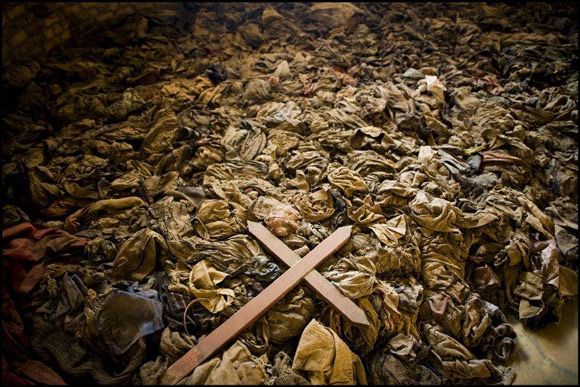
The Rwandan Genocide occurred in 1994. It led to the killings of an estimated 800,000 people. Hutu extremists killed an estimated 800,000 people, mostly from the Tutsi ethnic group, in a genocide that lasted approximately 100 days.
The violence was fueled by longstanding ethnic tensions and a broader political crisis.
Darfur Genocide (2003-ongoing)
The Sudanese government and its allied militia, known as the Janjaweed, have killed tens of thousands of people and displaced millions in the Darfur region.
Burundian Genocide (1972)
The 1972 Burundian genocide, also known as the Ikiza, was a mass slaughter targeting the Hutu ethnic group by the Tutsi-dominated army and government. The violence was sparked by a Hutu rebellion and led to widespread repression. The Tutsi-dominated government of Burundi killed an estimated 100,000 to 300,000 Hutu people.
Isaaq Genocide (1988-1991)
The Isaaq genocide (1988-1991) was a brutal campaign by Somalia’s regime against the Isaaq clan.
It was characterized by the bombing of cities like Hargeisa and Burco, mass executions and forced displacement, and widespread human rights abuses.
The Somali government under Siad Barre carried out a campaign of violence and genocide against the Isaaq people in northern Somalia.
South Sudanese Genocide (1991-2002 and 2013-2020)
Both the Sudan People’s Liberation Army (SPLA) and the South Sudan People’s Defence Forces (SSPDF) have been accused of carrying out genocidal attacks against civilians, particularly the Nuer people.
Central African Republic Conflict (2012-ongoing)
The conflict between the Seleka and Anti-Balaka groups has resulted in widespread human rights abuses and atrocities, including genocide against certain ethnic groups.
Mali Conflict (2012-ongoing)
The conflict in northern Mali has resulted in human rights abuses and atrocities, including genocide against certain ethnic groups.
Boko Haram Insurgency (2009-ongoing)
Boko Haram has carried out attacks and atrocities against civilians, including massacres and forced conversions, in northeastern Nigeria and surrounding regions.